No deadline, no implementing rule, and still a reason to open your catalog this week.
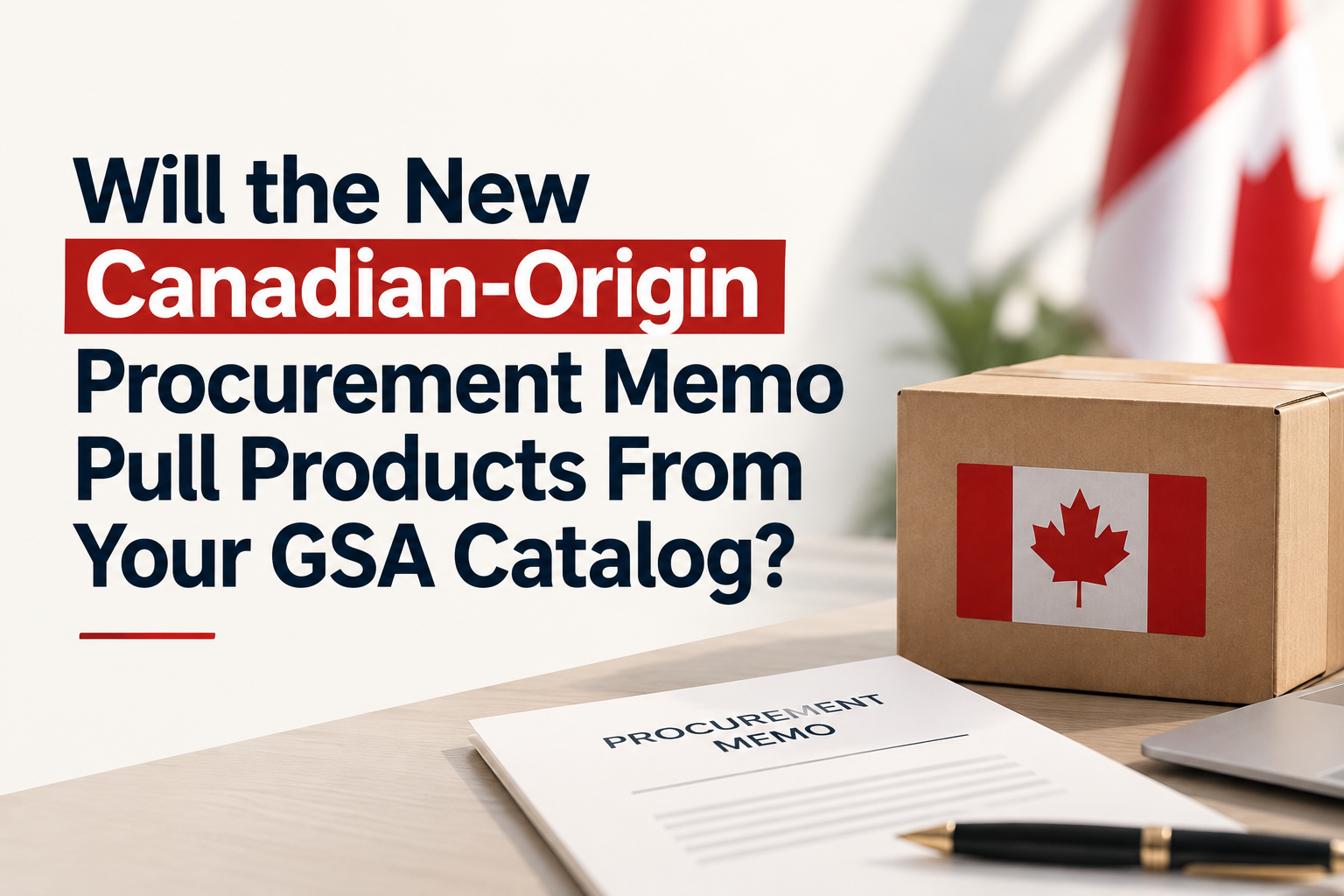
On September 16, 2026, the President signed a memorandum titled “Restoring Reciprocity in Government Procurement.” It directs the Director of OMB and the U.S. Trade Representative to identify and take steps toward removing, or otherwise making unavailable for purchase, Canadian-origin items in the federal civil procurement system. As of late September, no FAR or GSA guidance implements it. That makes now the cheapest time for GSA Schedule holders to find out which of their products are Canadian-made.
What Does the Memo Actually Require?
It tells OMB and USTR to start the work of pulling Canadian-origin items out of federal civil procurement, and to monitor how Canada treats U.S. goods in its own government buying. The FAR Council has a coordinating role.
What it doesn’t do yet matters as much:
- No deadline. The memo sets no date for removal.
- No named vehicles. It refers to the federal civil procurement system broadly and doesn’t name GSA Schedules, GSA Advantage! or any specific contract.
- No implementing rule. Nothing changes in your contract until the FAR, GSAR or your Schedule terms change, usually through a rule and a Mass Modification.
The White House fact sheet says Canadian companies have preferential access to over $280 billion of the U.S. government procurement system. That’s the scale the policy is aimed at.
Does the Memo Apply to GSA Schedule Contracts?
Not directly, yet. GSA Schedules are part of federal civil procurement, so they’re squarely within the memo’s scope, but no GSA action has been announced.
The realistic path is guidance from OMB and USTR, then rulemaking or a GSA directive, then a Mass Mod or catalog action on Schedules. Each step takes time. The first one to feel it will be product sellers whose catalogs include Canadian-made items.
Is Canada Still a TAA-Designated Country?
The memo doesn’t change Canada’s status on its own. Under the Trade Agreements Act, which applies to GSA Schedule products, Canada has been a designated country because of its free trade agreement with the United States.
Any change to that status would come through trade or regulatory action, not this memo alone. Before you rely on Canada’s status for a new product, check GSA’s current TAA designated country list.
How Do I Find Canadian-Made Items on My Schedule?
Start with the data you already report. Every product on your GSA catalog carries a country of origin.
- Export your current catalog from the FAS Catalog Platform or your catalog files.
- Filter by country of origin and flag every item listed as Canada.
- Check your suppliers for items where the country of origin came from the manufacturer and hasn’t been reconfirmed in a while.
- Rank the flagged items by sales so you know which removals would hurt and which wouldn’t.
- Identify U.S. or other designated-country alternatives for the items that matter most.
If you resell Canadian-made products, knowing which SKUs they are before guidance lands means one planned catalog modification instead of a scramble. A catalog review builds that list and the replacement plan with you.
What About Services Performed by Canadian Companies?
The memo talks about Canadian-origin items. It doesn’t mention services, and no guidance so far says whether services performed by Canadian firms or subcontractors are covered. If your Schedule uses Canadian subcontractors, note it on your watch list and wait for the implementing guidance before changing anything.
Our Take
Policy memos like this one move slowly until they don’t. When implementing guidance arrives, the catalog work lands on the contractor, usually with a short window. A Schedule holder who already knows which items are Canadian-made, what they sell and what replaces them turns that window into a routine modification.
Frequently Asked Questions
Does the Canadian-origin memo apply to GSA Schedule contracts?
GSA Schedules sit within federal civil procurement, which is what the memo covers. No GSA guidance or contract change has been issued yet, so nothing changes in your Schedule today.
Is Canada still a TAA-designated country?
The memo doesn’t change Canada’s Trade Agreements Act status by itself. Check GSA’s current designated country list before relying on it for new products.
Do I have to remove Canadian products from my GSA catalog now?
No. There is no deadline or implementing rule yet. It’s worth identifying those products now so you can act quickly when guidance arrives.
Does the memo cover services, or only products?
The memo refers to Canadian-origin items and doesn’t address services. Watch for implementing guidance before changing any subcontracting arrangements.
How do I check country of origin for every item on my Schedule?
Export your catalog, filter by country of origin, and confirm the Canadian entries with your suppliers. Then rank those items by sales to see where your exposure is.
Know Which Items on Your Schedule Are Exposed
You can’t plan a response to a rule you haven’t seen. You can know exactly which products it could touch, what they’re worth to you, and what replaces them. That’s a read of your catalog, not a pitch.
→ Start Your Country-of-Origin Catalog Audit
When guidance lands, you’ll already have the list.