DHS projected $10.5 billion in savings from canceled contracts. GAO found a net of about $92 million.
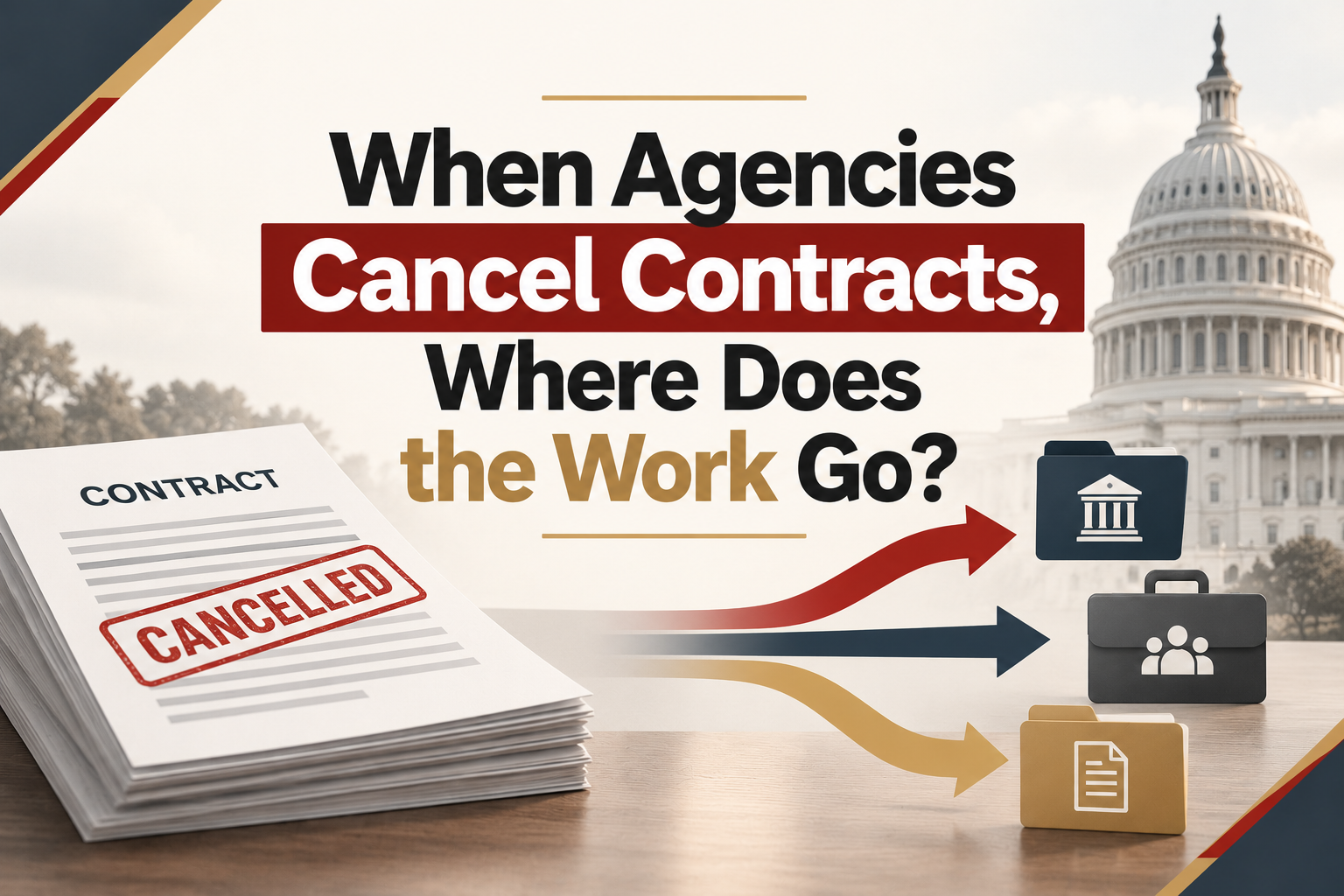
In report GAO-26-109096, published September 3, 2026, GAO found that DHS fully or partially terminated 438 contracts between January 20 and September 30, 2025, after reviewing more than 17,000. Net deobligations came to just over $92 million. To cover requirements it still had, DHS obligated more than $1.7 billion in fiscal year 2025 through existing government-wide contracts. Canceled work often doesn’t disappear. It moves to vehicles agencies already trust.
What Did GAO Find About DHS Contract Cancellations?
The savings DHS reported were a ceiling, not a result. GAO said the $10.5 billion figure represented the most that could have been obligated on the canceled contracts, not what DHS would have actually spent.
The numbers GAO reported:
| Measure | Figure |
|---|---|
| Contracts DHS reviewed | More than 17,000 |
| Contracts fully or partially terminated (Jan 20 to Sep 30, 2025) | 438 |
| Potential cost avoidance DHS reported | $10.5 billion |
| Deobligated, minus new obligations on the same contracts | Over $249 million out, $157 million back in, about $92 million net |
| Obligated through existing government-wide contracts to cover still-needed work (FY2025) | More than $1.7 billion |
Why Didn’t the Projected Savings Materialize?
Because the agency still needed much of the work. GAO pointed out that when an agency still has a requirement, canceling one contract doesn’t avoid the cost. It moves the cost to another contract.
The $1.7 billion replaced obligations from 30 terminated IT contracts that had been expected to run through fiscal year 2034. The requirements behind those contracts didn’t go away when the contracts did.
Where Did DHS Move the Canceled Work?
To existing government-wide contracts, according to GAO. That’s the category that includes GSA’s Multiple Award Schedule, GWACs and other contracts any agency can order from.
The pattern makes sense from the agency side. When a contracting office needs to replace a canceled requirement quickly, it reaches for a vehicle that’s already awarded, already competed and already priced. Starting a new standalone procurement takes far longer.
Does a Canceled Contract Create an Opening for GSA Schedule Holders?
It can, if you hold the right vehicle and the right SINs when the agency goes looking. It won’t if you’re still applying.
That’s the part of the GAO finding that matters for contractors. Cancellations at one agency can mean orders on government-wide vehicles at the same agency weeks or months later, and those orders go to firms who are already on contract. Our June post, Is DOGE Killing GSA Contracts, or Creating Opportunity for the Right Contractors?, made that argument. GAO’s numbers now back it.
If an agency you serve canceled contracts last year, some of that work may already be moving to vehicles you do or don’t hold. A federal market strategy session checks which, and where your SINs line up.
How Do I Find Requirements an Agency Is Reprocuring?
Watch the places replacement work shows up:
- SAM.gov notices from the agency’s contracting offices, including sources-sought and RFIs.
- GSA eBuy for RFQs posted to Schedule holders in your SINs.
- Agency procurement forecasts, which often list upcoming recompetes and replacements.
- Your existing contacts at the agency, who usually know first which canceled work still has to get done.
Our Take
The GAO report is really about vehicles. Agencies that cut contracts still had missions to run, and they turned to contracts that were already in place. Capitol 50’s GSA Verticalization™ service is built for that moment: aligning your Schedule’s SINs, pricing and catalog with the agencies whose requirements are shifting, so you’re on the vehicle when the work comes back.
Frequently Asked Questions
What did GAO find about DHS contract cancellations?
GAO found DHS fully or partially terminated 438 contracts in 2025 and reported $10.5 billion in potential cost avoidance. Net deobligations were about $92 million. The report is GAO-26-109096, published September 3, 2026.
Why didn’t the projected savings materialize?
The $10.5 billion was the maximum that could have been obligated, not expected spending. DHS also still needed much of the work, so costs moved to other contracts instead of disappearing.
Where did DHS move the canceled work?
GAO found DHS obligated more than $1.7 billion in fiscal year 2025 through existing government-wide contracts to meet requirements from the canceled contracts.
Does a canceled contract create an opening for GSA Schedule holders?
It can, when the replacement work goes to a government-wide vehicle and your Schedule has the right SINs. Firms already on contract are the ones positioned to win it.
How do I find requirements an agency is reprocuring?
Watch SAM.gov notices, GSA eBuy RFQs in your SINs and agency procurement forecasts. Your agency contacts will often know first.
Be on the Vehicle When the Work Comes Back
GAO’s finding is the map: canceled work moves to vehicles agencies already use. Which agencies, which vehicles and which of your SINs matter is the terrain, and that’s specific to your business. We’ll look at where your Schedule sits against the agencies you serve.
→ Start Your Vehicle Position Review
The work was always going to land somewhere. It might as well be your contract.