
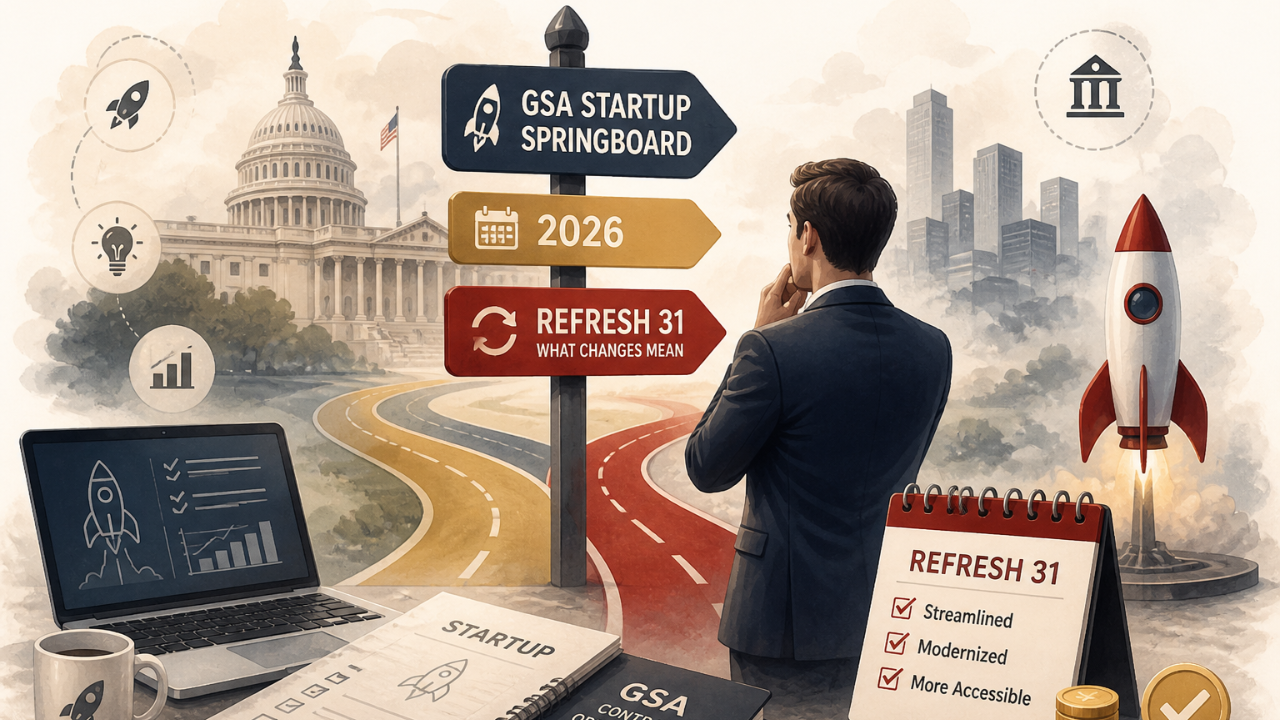
Can Startups Still Use GSA’s Startup Springboard in 2026? What Refresh 31 Changes Mean
If you run an emerging tech company and you’ve been planning a GSA Schedule submission through Startup Springboard, the door just got narrower. Refresh 31

Is Getting a GSA Contract Enough to Start Winning Federal Work in 2026?
Securing a GSA Schedule is a milestone, but it does not generate sales on its own. In 2026, federal buying is more centralized and strategic,

Should My Company Pursue GSA Schedule, OASIS+, or Alliant 3 in 2026?
Federal buyers are consolidating procurement around a few high-impact contract vehicles. With momentum behind OASIS+ and Alliant 3, service firms are reassessing where to invest.

Is GSA OneGov Changing How Agencies Buy Software and IT Services in 2026?
Federal agencies are accelerating their shift toward shared acquisition models, and OneGov sits at the center of that transformation. As the U.S. General Services Administration

What Is the Revolutionary FAR Overhaul and How Could It Change Federal Contracting for Small Businesses?
The federal acquisition landscape is entering a period of meaningful reform. On March 18, the U.S. General Services Administration described the Revolutionary FAR Overhaul (RFO)

What Does Procurement Consolidation Mean for GSA Contractors in 2026?
Procurement consolidation is rapidly reshaping how federal agencies buy goods and services, and it’s becoming central to the U.S. General Services Administration acquisition strategy for

How Is GSA Changing AI Procurement in 2026? What Contractors Need to Know Before Selling AI to the Government
Artificial intelligence procurement is no longer just a technology conversation—it’s an acquisition transformation. In 2026, federal agencies are redefining how AI is evaluated, purchased, and
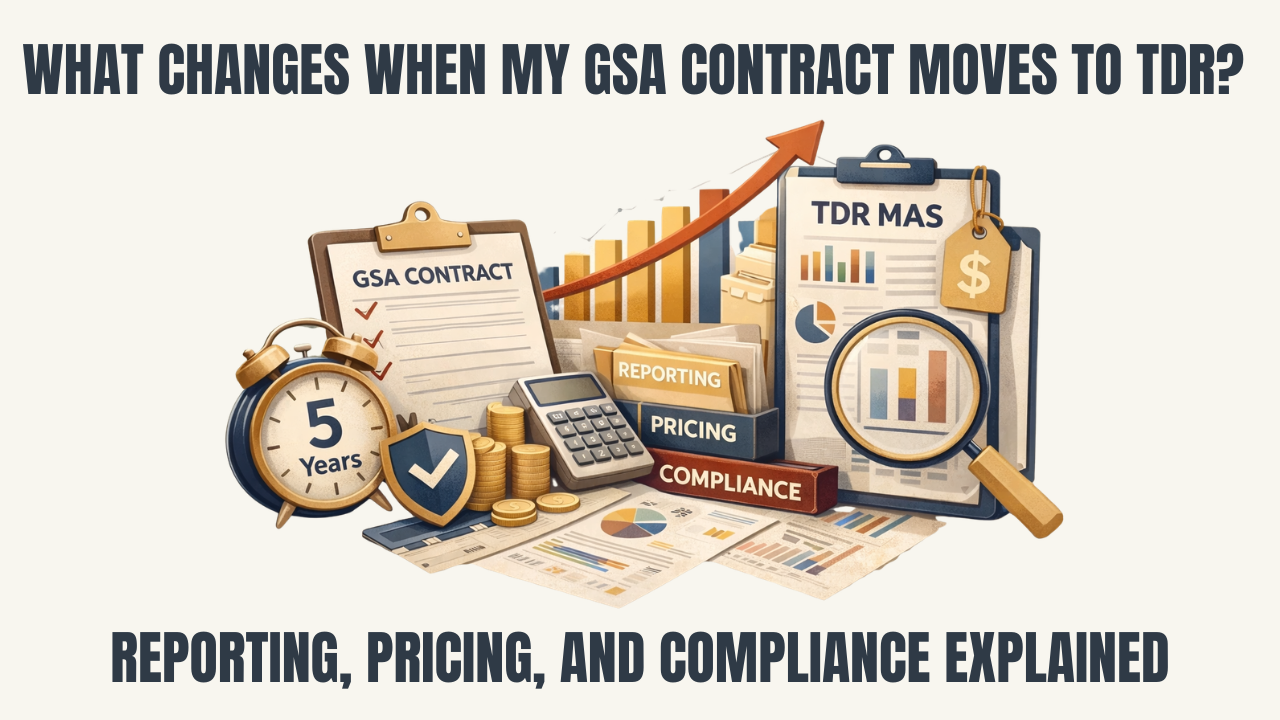
What Changes When My GSA Contract Moves to TDR? Reporting, Pricing, and Compliance Explained
If your contract is transitioning, you’re not asking whether TDR is happening anymore. You’re asking: “What happens when my GSA contract moves to TDR —